


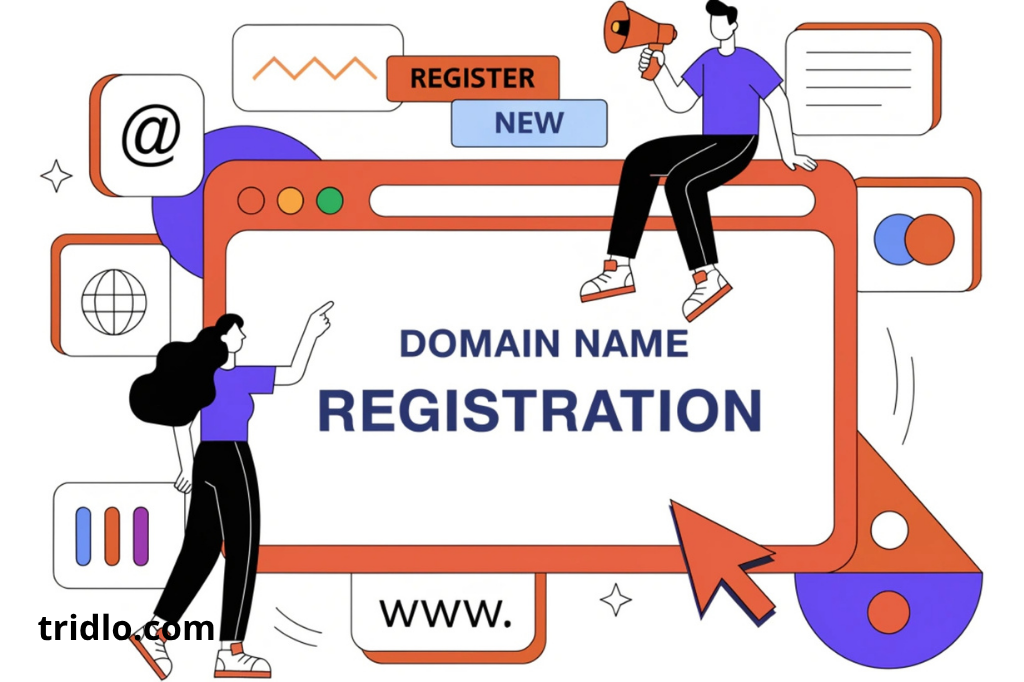
Domain name registration is the process of securing a unique web address for a website. Registration ensures that no other entity can use the same domain within the chosen time frame. Registrars operate under ICANN guidelines to manage the assignment of domain names to individuals or organizations.
Key components include registration with a trusted registrar, a per-year renewal period, and agreement terms that outline rights, responsibilities, and renewal costs. Understanding these basics helps in selecting a registrar that aligns with objectives such as predictable pricing and reliable support.
How Does Domain Name Registration Work
The process typically involves a search to confirm availability, followed by purchase and registration. The registrar interacts with the domain registry to record ownership and set renewal terms. After registration, the domain is associated with authoritative DNS records to route traffic to the intended website or service.
During this process, it is important to review fee structures, including any registry fees and potential add-ons, to avoid surprises at renewal time.
How Much Does Domain Name Registration Cost
Prices vary by registrar and TLD, with typical introductory offers and transparent renewal costs. Costs often include the base domain price plus registry fees, and some providers advertise no add-on fees.
When evaluating options, compare:
- Initial registration cost
- Annual renewal cost
- Any hidden or unusual charges
- Included services such as DNS management or WHOIS privacy
How to Choose the Right Domain Name
Tips for Choosing a Memorable Domain Name
A concise and relevant domain name supports brand recognition and user recall. Prioritize clarity and alignment with your business context, avoiding complex spellings and hyphens that can introduce confusion. Short, descriptive names generally convey professionalism and are easier to remember.
Test how the domain reads aloud and appears in print to gauge consistency with existing brand assets. This consistency aids cross-channel marketing and strengthens recognition. It is important to verify that the chosen name does not convey unintended meanings in other languages or markets.
How to Choose the Best Domain Extension
Top-level domains (TLDs) influence audience perception and credibility. Align the extension with the target geography and audience, such as a regional TLD for local markets or a generic TLD for broader reach. Assess security features and compatibility across platforms when evaluating options.
Evaluate availability, renewal costs, and governance policies. Some extensions provide enhanced security features or clearer trademark considerations, which affect long-term management of the domain portfolio.
Common Domain Name Mistakes to Avoid
- Choosing a name that is too long or difficult to spell
- Overlooking future branding or product diversification needs
- Neglecting to check trademark conflicts or potential misinterpretations
- Failing to secure related domains to protect branding and prevent dilution
Understanding Domain Extensions
Top-level domains and their implications
Top-level domains, or TLDs, define the final segment of a domain name and influence credibility, audience perception, and regional relevance. Choices range from generic options to country code variants, each with distinct governance policies and renewal considerations. The selection can affect search visibility, brand positioning, and ease of recall for users in target markets.
When evaluating TLDs, assess governance terms, available DNS tooling, and security considerations. Some TLDs are supported by registries that offer advanced management features, while others emphasize localized hosting or industry alignment. The relationship between TLD policy and registry implementation can impact renewal scheduling and portfolio flexibility.
When to choose .com vs. other extensions
The .com extension remains widely recognized and is often perceived as providing global reach. Nonetheless, alternative extensions may better reflect regional focus, industry alignment, or a specific branding strategy. In some cases, non-.com options offer immediate availability for desirable names or clearer trademark positioning.
| Criterion | .com | Other extensions |
|---|---|---|
| Global recognition | High | Variable |
| Availability | Often limited for common names | Higher likelihood of availability |
| Branding alignment | Neutral, versatile | Industry or region specific |
| Security tooling | Broad support | Registry-specific features |
How to Complete Domain Name Registration
How to Search for an Available Domain Name
Begin with criteria aligned to your brand and audience. Use a domain search tool to verify availability across multiple TLDs and registrars. Availability can vary due to reseller inventories and registry status.
Consider alternative spellings or related terms to broaden options while preserving brand integrity. Record several viable candidates to compare later in the process.
Steps to Register a Domain Name
Follow a structured workflow to complete registration efficiently. Start by selecting a domain, proceed to verification, and finalize with payment and a registration confirmation. While interfaces may differ, the core sequence remains consistent.
- Choose an available domain name from the search results.
- Provide registrar account details or create a new account.
- Review registrar terms, renewal policies, and any fees.
- Enter contact information for WHOIS records and DNS settings.
- Complete payment to secure the registration and receive confirmation.
What to Check Before Registering a Domain
Assess factors affecting ownership and ongoing management, including renewal costs and any add‑on charges at renewal. Verify DNS and privacy options to protect contact details and ensure reliable resolution.
Evaluate transfer options, lock status, and compatibility with existing hosting or email services. Align the domain choice with broader branding and portfolio considerations to minimize future changes.
Managing Your Domain After Registration
How to Renew Your Registered Domain Name
Renewal extends ownership and maintains continued control over the domain. Align the renewal timing with portfolio planning to prevent lapses. Review the registrar terms to confirm base renewal costs and any applicable taxes or registry fees.
Auto-renew options are commonly available to mitigate expiration risk. Monitor payment methods on file and keep contact details up to date so renewal notices reach the correct address. Regular audits of the domain portfolio help sustain visibility and accuracy.
Domain Privacy and Security Protection
Privacy protection hides personal contact information from public WHOIS records, reducing exposure to unsolicited inquiries. DNSSEC and related security features can improve integrity by validating DNS responses. Assess whether privacy services are bundled or billed separately and consider long-term cost implications for portfolio management.
Periodically review account access controls, enable two-factor authentication where possible, and set up alerts for changes to ownership or DNS settings. These practices support stable domain operations within a growing portfolio.
How to Transfer a Domain to Another Registrar
Transfers support consolidation or diversification of registrar relationships and can influence renewal timelines and pricing. Initiate a transfer once the domain is unlocked and the authorization code is available from the current registrar. Ensure WHOIS details are current to receive transfer confirmations.
Anticipate potential downtime during the move and verify that DNS records will migrate correctly to avoid service disruption. Document the new registrar terms, including renewal costs and any transfer fees, to maintain a transparent cost structure for the portfolio.
The Registration Process
Step-by-step from search to checkout
The process starts with a domain search to identify available options across multiple TLDs. Results are then evaluated against branding goals, budget considerations, and portfolio strategy. After selecting a candidate, the user creates or signs into a registrar account and completes verification steps as required. Payment finalizes the registration, after which a confirmation is issued by the registrar.
During checkout, expect a clear itemized view of base registration and renewal fees. Some providers separate registry charges from optional services, aiding price transparency. The workflow is designed to capture essential ownership details for DNS configuration and WHOIS records with minimal friction.
Essential information required during registration
- Registrant contact details for WHOIS records, including name, organization, address, email, and phone number
- Administrative and technical contact information, if different from the registrant
- Chosen domain name and preferred registration term length
- DNS settings or delegation preferences, such as name servers or DNS hosting details
- Privacy preferences, including whether WHOIS privacy is desired
- Payment method and billing address to complete the transaction
- Authorization parameters if transferring an existing domain from another registrar
Privacy, Security, and DNS Essentials
Privacy protection and WHOIS privacy
Privacy protection hides personal contact information from public records, reducing exposure to unsolicited inquiries. It is important to verify whether privacy services are included with the registrar or billed separately, as this influences total ownership costs. Transparency in how privacy is applied helps maintain a clean, professional brand presence in WHOIS.
DNS security features support privacy by guarding against credential theft and unauthorized changes. Enable available protections and review access controls on the registrar account to minimize risk. Regularly audit contact details to ensure accuracy and timely notification of important domain events.
DNS basics: A records, CNAME, MX, and propagation
Fundamental DNS records direct traffic to the correct services. An A record maps a domain to an IP address, a CNAME provides an alias, and MX records specify mail server endpoints. Understanding these records supports reliable website and email delivery.
DNS propagation describes the time required for changes to spread across the global network. During this window, some users may reach old or new destinations. Plan DNS updates with this latency in mind to avoid service disruption.
Managing Your Domain After Registration
Renewal strategies and auto-renew options
Following registration, establish a renewal framework aligned with portfolio maintenance. Assess renewal costs across TLDs and monitor renewal dates to prevent ownership gaps. Auto-renew options are commonly available to mitigate expiration risk and should be configured where appropriate.
Key considerations include timing relative to potential price changes, availability of multi-year terms, and any discounts for extended registrations. Maintain a centralized calendar to track expirations and ensure continuity of DNS services and email delivery.
- Enable auto-renew where supported to avoid inadvertent lapses.
- Set reminders several weeks before renewal to review current services.
- Review renewal notices for any changes in fees or terms.
Transfers, lock status, and renewal reminders
Transfers should be planned with attention to lock status and authorization codes to minimize downtime. Before initiating a transfer, verify that the domain is unlocked and that WHOIS contact details are up to date. Prepare the authorization code and confirm that DNS settings will migrate correctly.
Domain lock status provides protection against unauthorized changes. Ensure the lock remains engaged until a deliberate transfer is executed. Renewal reminders tied to the registrar account help maintain predictable ownership and prevent service interruptions.
- Confirm current registrar terms before initiating a transfer to avoid unexpected fees.
- Maintain accurate contact details to receive transfer and renewal communications.
- Document DNS delegation and any changes during transfers to prevent service disruption.
FAQ
What is domain name registration and how does it work?
Domain name registration is the process of securing a unique web address for your website. A registrar contracts with registry operators to allocate and maintain domain names. The registrant provides contact information and payment, and the registrar records the ownership in the WHOIS database. ICANN-accredited registrars oversee the process to ensure consistency and compliance across TLDs.
How much does domain name registration cost?
Registration costs vary by TLD and registrar, and may include baseline fees, renewal costs, and optional services. Transparent pricing is important, as some providers advertise low initial prices but apply additional charges later. Review the renewal costs and any registry fees when evaluating total ownership expenses.
How do I register a domain name for my website?
Begin with a domain search to confirm availability, then proceed to the registration checkout. You will supply registrant details, select a registration term, configure DNS settings, and choose privacy options. Some registrars offer bundled services such as email or hosting; verify whether these add-ons carry separate charges.
How do I choose the best domain name for my business?
Consider clarity, memorability, and relevance to your brand. Short names are easier to recall, while keywords can aid discoverability. Avoid hyphens and ambiguous spellings to reduce user friction. It is prudent to verify consistency across social handles and avoid trademark conflicts.
How long does domain name registration last?
Registrations are typically available in multi-year terms, with the option to renew automatically. Renewal timing is critical to prevent lapse and potential loss of the name. Maintain current contact details with the registrar to receive renewal notices and avoid service interruptions.
Conclusion
The conclusion reinforces the core guidance provided in this guide: to approach domain name registration with clarity, discipline, and a focus on long term management. It emphasizes that reliable planning reduces risk and supports a smooth website launch.
Recap of key steps
Key takeaways include aligning the domain choice with brand strategy, validating availability through a trusted registrar, and assessing the full cost scope. Preparing DNS settings in advance minimizes launch delays, and privacy considerations should be reviewed as part of portfolio governance. Documentation of ownership details and renewal timelines remains essential.
Next steps for your website launch
- Finalize domain registration with transparent pricing and clear renewal terms.
- Configure DNS records to match the hosting setup and messaging needs.
- Enable available security measures such as DNSSEC where applicable.
- Maintain current registrant information and privacy settings to support compliance and governance.