



The best email marketing platform for a small business is the one that can handle your actual contact list, sending schedule, and customer follow-up without forcing you into features you will not use. A neighborhood bakery sending a weekly offer needs something different from an online store sending product reminders after a purchase.
Start with the work you want email to do. Then compare the cost at your expected list size—not just the price shown for a new account. The six platforms below cover common needs for U.S. small businesses, from a first newsletter to store-connected campaigns.
Quick answer: Which platform should you shortlist?
| If your business needs… | Start by looking at… | Check before signing up |
|---|---|---|
| Straightforward newsletters, forms, and landing pages | MailerLite | Its free plan currently stops at 250 subscribers. |
| A larger stored list with modest daily sending | Brevo | Its free plan limits sends to 300 per day. |
| A familiar general marketing platform | Mailchimp | Contact and sending limits, plus the paid tier needed for your workflow. |
| Email alongside local promotions and events | Constant Contact | The price and automation features at your contact tier. |
| A newsletter or content-led audience | Kit | Whether its creator-focused workflow fits how you sell. |
| An online store using customer and purchase data | Klaviyo | Active-profile costs and the store integration you need. |
These are starting points, not a performance ranking. Plan limits and included features were checked against provider pages on September 24, 2026. For example, MailerLite lists 250 subscribers and 2,500 monthly emails on Free; Brevo lists 300 daily sends on Free; and Klaviyo lists 250 active profiles and 500 monthly sends on Free. Check each provider’s current checkout terms before committing.
Image 1 placement: directly below this quick-answer section.
What to compare before choosing email marketing software
A low starting price tells you little about what the platform will cost after your list grows. Write down these four numbers first:
- Current contacts: How many people have agreed to hear from your business?
- Expected contacts: What is a realistic list size six to twelve months from now?
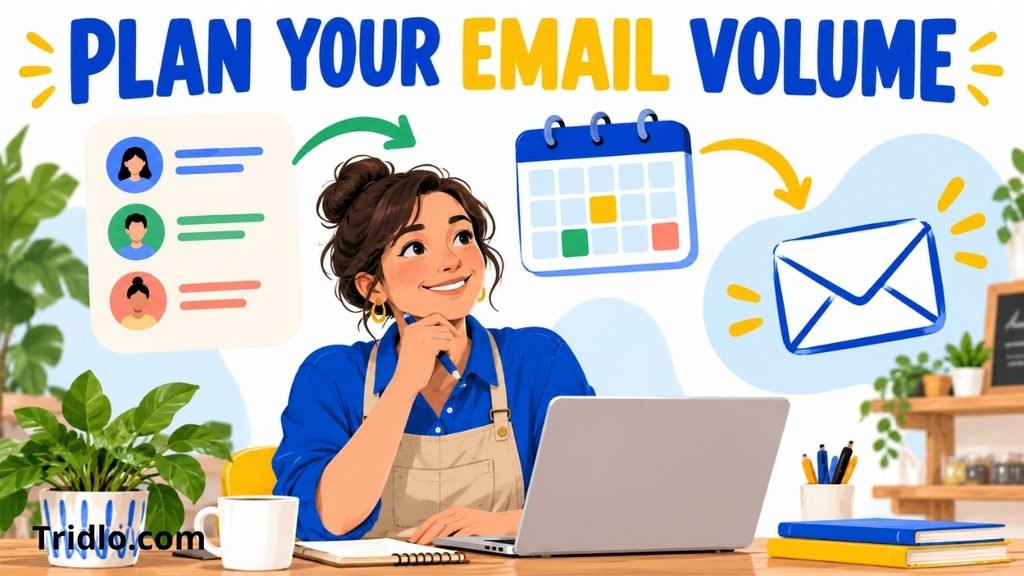
- Monthly sends: Multiply the number of recipients by the campaigns you expect to send. A newsletter to 800 people twice a month means roughly 1,600 campaign sends, before automated emails.
- People using the account: Will an owner work alone, or will staff and an agency need access?
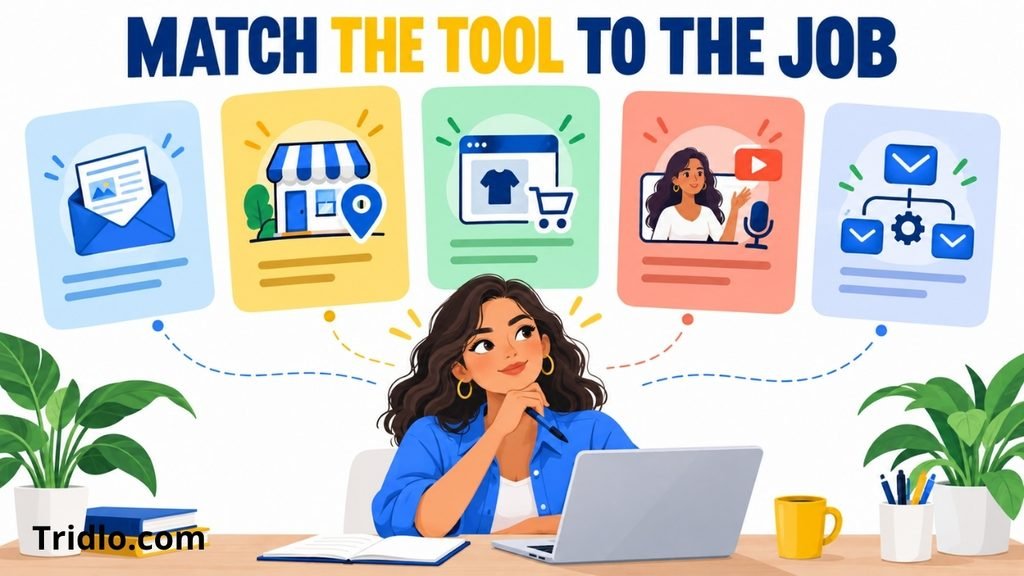
Next, identify one essential workflow. A service business might need a signup form and a welcome email. A retailer might need campaigns connected to its store catalog. A consultant might need subscribers grouped by the service they asked about. Automation means an email or sequence sent after a defined action, such as joining a list; check whether the particular automation you need is included in the plan you can afford.
Finally, look at billing details: whether the platform counts stored contacts, active profiles, subscribers, or email sends; what happens at a limit; whether a quoted rate is promotional or tied to annual prepayment; and what you can export if you move later. Brevo’s own plan documentation, for example, shows that its paid sending tiers can also have different contact-storage limits.
Image 2 placement: after the selection criteria, before the platform comparisons.
Six email marketing platforms for small business
MailerLite: A practical starting point for simple campaigns
MailerLite is worth shortlisting if you need newsletters, signup forms, a landing page, and a basic welcome sequence in one place. Its published Free plan includes up to 250 subscribers, 2,500 emails per month, two user seats, and automations. That makes it useful for trying a complete signup-to-email workflow with a small list.
The main caution is the subscriber ceiling. A business approaching 250 active subscribers should price a paid tier before building its entire process around Free. MailerLite now calls its paid tiers Comfort and Power; the company says Comfort has feature-use and sending limits that differ from Power. Confirm the applicable subscriber tier and monthly or annual billing at checkout.
Best fit: A new service business, independent professional, or shop that wants a simple first newsletter and signup process.
Brevo: Useful when list size and sending frequency differ
Brevo’s Free plan lists storage for up to 100,000 contacts but limits sending to 300 emails per day. That distinction matters: a business can store a sizable list yet still be unable to email the whole list in one day on Free. The allowance resets daily, and unused sends do not roll over.
Brevo can make sense when a business collects contacts steadily but sends relatively small or segmented campaigns. Its paid Starter tiers remove the daily sending limit, though the number of contacts allowed varies by tier. Work out both your largest single-day campaign and your total monthly sending before comparing plans.
Best fit: A business willing to plan sends around a daily limit while starting out, or one that wants to compare paid tiers by its actual send volume and contact count.
Mailchimp: A familiar general-purpose option
Mailchimp offers a broad marketing platform, but its Free plan currently has a 250-contact limit. Its pricing page says sending pauses when a Free account reaches a contact or email-send limit; paid plans may involve overages. The paid price displayed depends on the selected plan and contact tier, so a headline starting rate is not a reliable budget for every business.
Mailchimp belongs on your shortlist if it connects well with tools you already use or its campaign workflow suits your team. Before choosing it, map your required forms, segments, automations, and sends to a specific paid tier. Do the same check with every competing platform.
Best fit: A small team seeking a general marketing platform and prepared to compare feature access at its likely contact count.
Constant Contact: Consider it for local promotions and events
Constant Contact is an option for a local business that wants to coordinate email with other promotional work. Its plans are organized as Lite, Standard, and Premium. The provider says Standard starts at $35 per month in USD and includes scheduled and automated email sends, contact segmentation, and subject-line comparison testing. Plan pricing changes with the applicable contact tier, and prepayment offers can affect the amount shown.
If your only goal is a monthly newsletter, compare the total cost against a simpler platform. If you run classes, appointments, or community events, assess the complete workflow you would actually use rather than paying for an extensive feature list on paper.
Best fit: A local organization or service business that expects to use more than basic newsletter sending.
Kit: Built around a content-led audience
Kit’s Free plan currently lists up to 10,000 subscribers, unlimited landing pages and forms, and unlimited email broadcasts. Those published limits make it worth examining for a writer, educator, consultant, or small business that grows an audience through useful content.
A high subscriber allowance does not automatically make a platform the cheapest choice for every workflow. Check which automated sequences, integrations, and team features your specific plan includes. If you sell primarily through a connected product catalog, compare a store-oriented platform too.
Best fit: A content-first business publishing a newsletter and collecting subscribers through articles or landing pages.
Klaviyo: A store-oriented option
Klaviyo is most relevant when customer and purchase information from an online store will shape your emails. Its Free plan is limited to 250 active profiles and 500 monthly email sends; the provider says sending may be restricted after either limit is exceeded. It also says full email support on Free is available for the first 60 days.
For a store, the useful question is whether you can put purchase-related information to work in campaigns and follow-ups. Verify that your ecommerce platform connects as needed, then compare the paid price at your projected active-profile count. A local service business with no store may have little reason to pay for a store-centered workflow.
Best fit: An ecommerce business prepared to use customer and order data in its email program.
Estimate the cost at your real list size
Use a small planning sheet before opening a trial. This is a hypothetical workload, not a quoted vendor price:
| Planning input | Example business |
|---|---|
| Contacts today | 400 |
| Contacts projected in six months | 900 |
| Regular campaigns | 2 per month |
| Campaign sends at projected size | About 1,800 per month |
| Other sends to account for | Welcome and follow-up emails |
With this example, a free plan capped at 250 contacts cannot serve the projected list. A plan with ample contact storage could still have a daily send limit that prevents one campaign to all 900 people. Price the tier that supports 900 contacts, the busiest sending day, and the required automation, then compare its billing terms.
Image 3 placement: immediately after the cost-planning example.
How to launch your first campaign
Before you begin: Have a business email address, a page or form explaining what people are signing up for, and a list of people you are permitted to contact under the applicable rules and your provider’s policies. Do not import a purchased list as a shortcut.
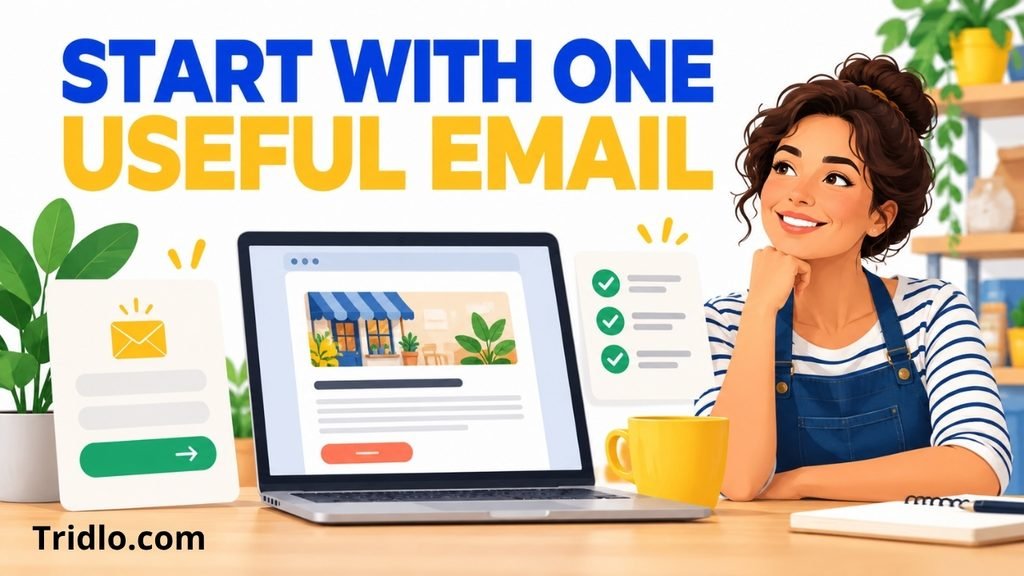
- Choose one purpose. For a local bakery, that might be a Friday email with the weekend menu and ordering deadline.
- Create one signup form. State what subscribers will receive and how often. Add it to a relevant page or checkout flow.
- Organize contacts only where useful. You might distinguish retail customers from wholesale inquiries; avoid collecting details you will not use.
- Write one welcome email. Thank the subscriber, deliver what the form promised, and give one clear next action.
- Send a test to yourself and a colleague. Check the subject line, links, mobile layout, business details, and unsubscribe mechanism.
- Review the first campaign. Look for broken links, replies, unsubscribes, and whether people took the intended action. Use what you learn to improve the next email.
If a campaign cannot be sent, check the platform’s contact and send limits, account approval requirements, and any warning shown in the dashboard. If messages look wrong on a phone, simplify the layout and test it again before sending to the list.
For U.S. commercial email, the FTC’s CAN-SPAM guidance explains requirements including truthful header information, nondeceptive subject lines, a valid physical postal address, and a way to opt out. The law’s requirements apply to commercial messages; your platform’s own permission rules may be stricter.
Image 4 placement: after these launch steps, before the FAQs.
Common selection mistakes
- Choosing by the free subscriber limit alone. Check daily and monthly sends, automations, and the upgrade cost.
- Comparing different list sizes. Request or calculate each paid price using the same projected contacts and workload.
- Building too many sequences at once. Launch one useful welcome email and a manageable campaign schedule first.
- Assuming a tool guarantees inbox placement. Your list quality, sending setup, and recipients’ responses matter; no platform can promise every message reaches the inbox.
- Ignoring portability. Confirm how to export contacts and what information will accompany them if you later switch services.
Frequently asked questions
Can I start email marketing for free?
Yes, several platforms offer free plans. Their limits differ substantially: some restrict contacts or active profiles, while others restrict daily or monthly sending. Match the free plan to the campaign you intend to run, and check its upgrade path before your list reaches a limit.
Is email marketing software the same as a business inbox?
No. A business inbox handles individual correspondence. An email marketing platform manages subscriber lists, signup forms, campaigns, unsubscribe requests, and often automated messages. You may use both with the same business domain.
Do I need automation for my first campaign?
No. A clear signup form and one useful email are enough to begin. A welcome email is a sensible first automation once you are ready, because it follows a defined action: someone joining your list.
Which platform is best for a very small online store?
Shortlist a store-oriented option such as Klaviyo alongside a simpler general platform. Compare the store integration, the customer information available for campaigns, and the paid cost at your projected profile count. The best choice depends on the workflows you will actually use.
Make the decision with one small test
Shortlist two platforms that support your projected list and busiest sending day. In each, try to build the same signup form, welcome email, and sample campaign. Then compare the full paid cost and the steps your team would repeat each week. Choose the one that makes that real workflow manageable within your budget.